


Home Solar Energy System Cybersecurity Guidelines
Text-only description
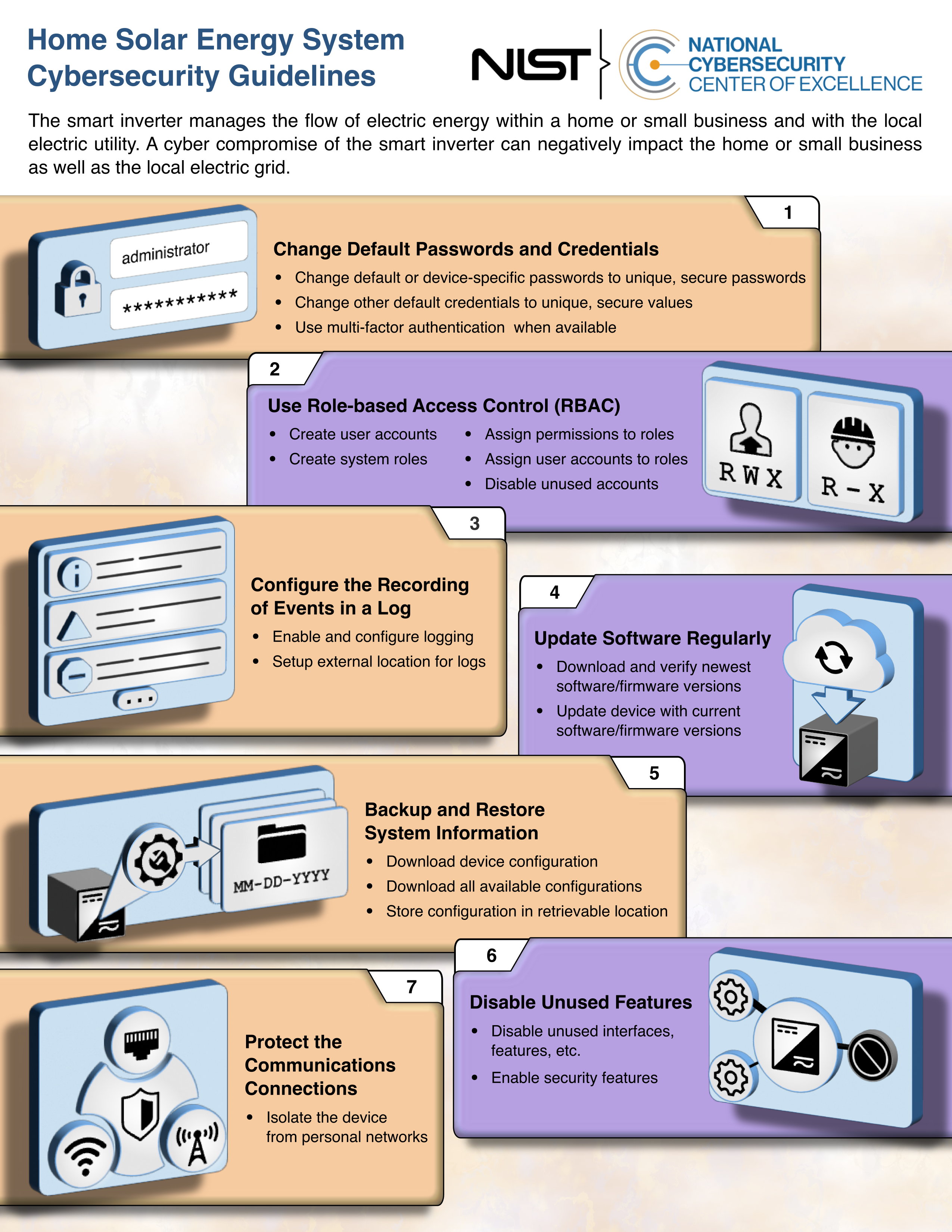
The smart inverter manages the flow of electric energy within a home or small business and with the local electric utility. A cyber compromise of the smart inverter can negatively impact the home or small business as well as the local electric grid.
- Change Default Passwords and Credentials
- Change default or device-specific passwords to unique, secure passwords
- Change other default credentials to unique, secure values
- Use multi-factor authentication dwhen available
- Use Role-based Access Control (RBAC)
- Create user accounts
- Create system roles
- Assign permissions to roles
- Assign user accounts to roles
- Disable unused accounts
- Configure the Recording of Events in a Log
- Enable and configure logging
- Setup external location for logs
- Update Software Regularly
- Download and verify newest software/firmware versions
- Update device with current software/firmware versions
- Backup and Restore System Information
- Download device configuration
- Download all available configurations
- Store configuration in retrievable location
- Disable Unused Features
- Disable unused interfaces, features, etc.
- Enable security features
- Protect the Communications Connections
- Isolate the device from personal networks